Ancestors of William K. Hutchinson III
Updated: -
Notable People
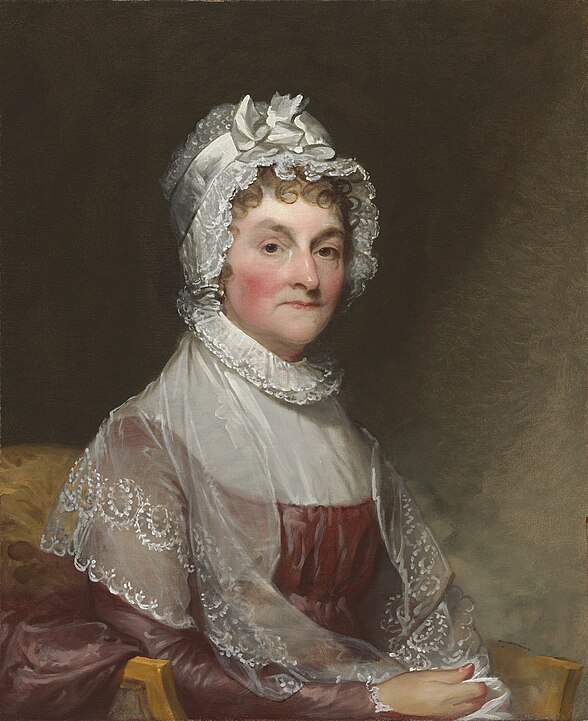
| Abigail Adams née Smith, the wife of President John Adams Jr., the second president of the United States, who was also a remarkable and strong figure in her own right. Her extensive correspondence provides invaluable insight into the American Revolution and the early republic. Beyond her role as a wife and mother, including her support of future President John Quincy Adams, she was a keen observer of politics and a strong advocate for women's rights and education. Her letters urged her husband and founding fathers to "remember the ladies" when shaping the new nation. While John was away during the Revolutionary War, she took charge of the family farm and finances, showcasing her strong and independent character. Her insightful commentary and unwavering support for her husband's political career solidified her status as an influential American patriot. Abigail is also noted for prediction and quote used at Disney theme parks today, "I am apt to believe that it [The Fourth of July] will be celebrated, by succeeding Generations, as the great anniversary Festival ... to be solemnized with Pomp and Parade, with Shews, Games, Sports, Guns, Bells, Bonfires and Illuminations from one End of this Continent to the other from this Time forward forever more." |
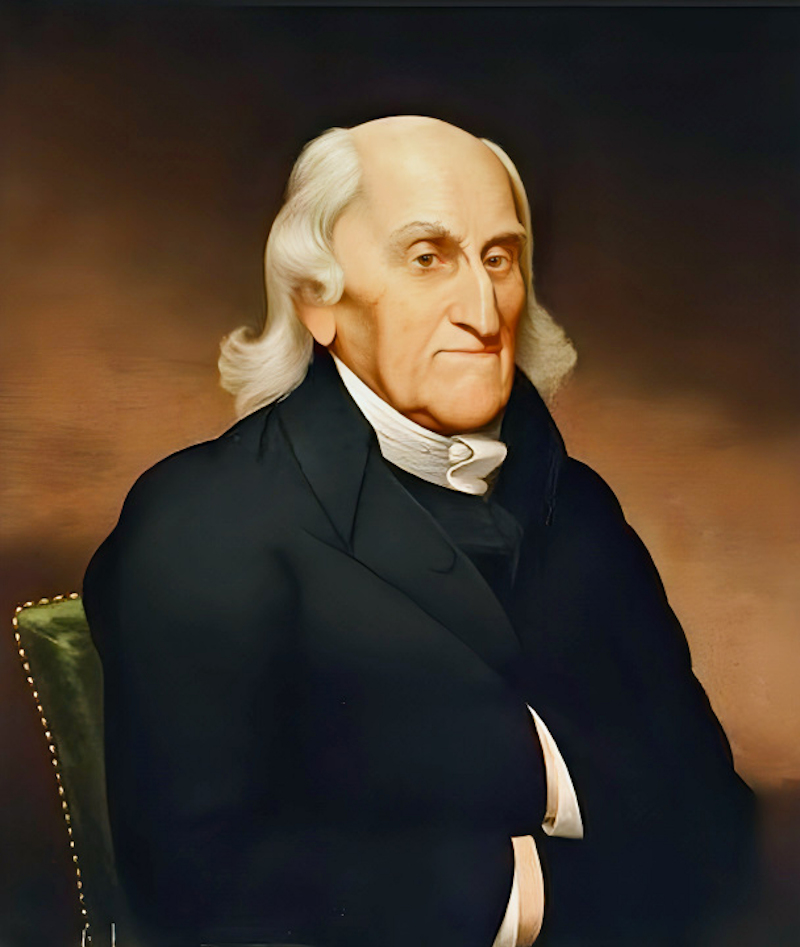
| John Adams was the 2nd president of the United States, serving from 1797 to 1801 and married to Abigail Smith Adams and father of future President John Quincy Adams. He was a pivotal figure in early American history, a lawyer, diplomat, and political theorist, and he played a crucial role in the nation's founding. A leading voice for independence, he served in the Continental Congress, contributing significantly to drafting The Declaration of Independence. His diplomatic efforts in Europe were essential in securing foreign support during the Revolutionary War and helped negotiate the Treaty of Paris in 1783, formally ending the war. Later, as Vice President under George Washington (1789 to 1797) and then as the second President of the United States, Adams navigated the fledgling nation through turbulent times, notably avoiding a full-scale war with France. Though his presidency was marked by political strife, his dedication to the principles of liberty and his unwavering commitment to the nation's well-being cemented his legacy as a true American patriot |
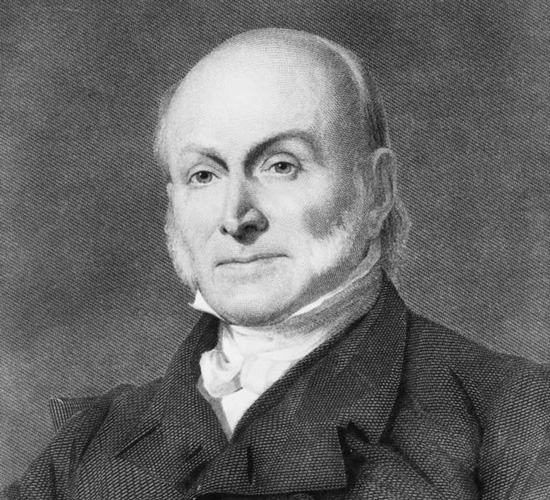
| John Quincy Adams was the 6th president of the United States, serving from 1825 to 1829. He was the son of Abigail Adams and President John Adams Jr., the 2nd president, making him the first son of a president to hold this office. Before becoming president, Adams was a brilliant and accomplished diplomat. He was crucial in negotiating the Treaty of Ghent, which ended the War of 1812. As secretary of state under President James Monroe, he helped formulate the Monroe Doctrine. This foreign policy statement warned European powers against further colonization in the Americas. After leaving office, Adams served in the House of Representatives for eighteen years and continued to be a vocal opponent of slavery |
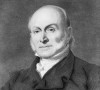
| John Alden played a crucial, though initially unintended, part in the founding and survival of Plymouth Colony. Alden, unlike the Pilgrims, was not sailing for religious reasons. He was a cooper, hired in Southampton to secure the Mayflower's food and water during the arduous 1620 trip. This task was essential to the vessel's success, rendering the 21-year-old an indispensable member of the crew. Upon reaching Cape Cod, Alden was presented with the option of returning to England aboard the ship; however, he chose to remain with the colonists and integrate into the new community. His first act as a settler was signing the Mayflower Compact, establishing self-governance, making him the youngest of 41 signatories. Alden’s decision to remain permanently cemented his place in American history, leading to his marriage to fellow passenger Priscilla Mullins, one of the few survivors of the devastating first winter. Following the initial hardship, Alden quickly transitioned from a tradesman to a foundational political leader in Plymouth. Leveraging his practical skills and his status as an early settler, he rose to serve the colony in numerous high-ranking administrative capacities. For over forty years, Alden held the office of Assistant to the Governor, participating in the colony's council, judicial decisions, and executive functions almost continuously from 1633 until his death in 1687. Alden served as the colony's Treasurer and was a member of the Council of War, contributing to economic stability and defense. He co-founded Duxbury, where he lived until his death. |
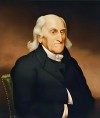
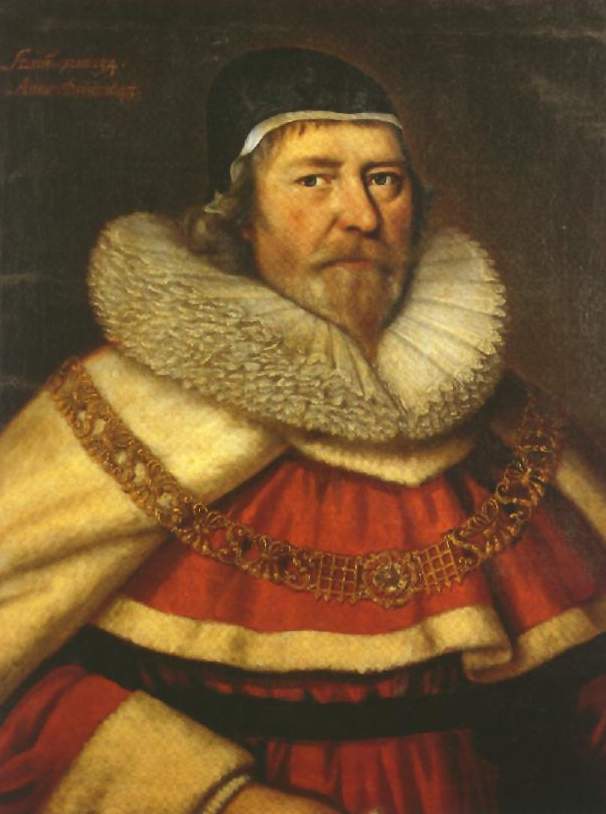
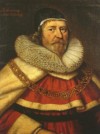
| Sir John Banks, husband of Lady Mary Hawtrey Banks, was a prominent English lawyer and politician who rose to high office during the reign of King Charles I. He studied law and entered Gray's Inn, eventually serving in the House of Commons. Bankes's legal acumen led to his appointment as Attorney General in 1634, where he was involved in significant legal matters, including the controversial ship money cases. In 1640, he was appointed Chief Justice of the Common Pleas, one of the highest judicial positions in England. Bankes was a staunch supporter of King Charles I, and his career was deeply intertwined with the King's. He remained loyal to the Royalist cause during the English Civil War, following the King to York. His wife, Lady Mary Bankes, famously defended Corfe Castle against Parliamentary forces. Bankes's fidelity to the monarchy defined his actions and contributions during this tumultuous period in English history |
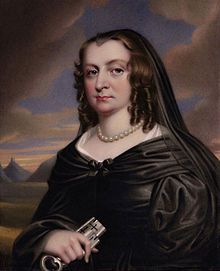
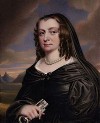
| During the English Civil War, Lady Mary Hawtrey Banks, wife of Sir John Bankes II, is best known for her staunch Royalist defense of Corfe Castle during the English Civil War. When Parliamentary forces besieged the castle, Lady Bankes took charge, organizing its defense with remarkable determination. She and her small garrison, which included her daughters and servants, famously resisted multiple attacks. Her leadership and bravery in holding out against the Parliamentary forces earned her the nickname "Brave Dame Mary" and solidified her place in history as a symbol of Royalist fortitude and female resilience during a turbulent period in English history |
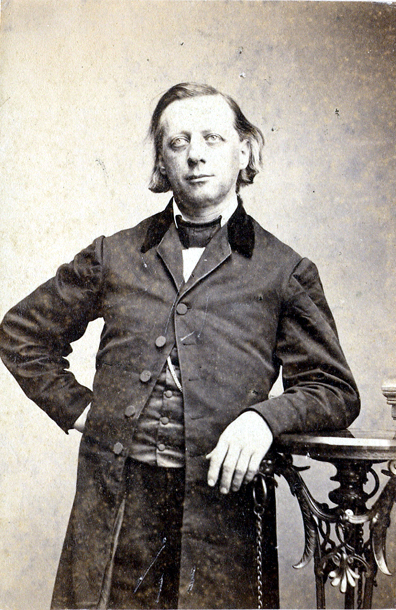
| Rev. Henry Ward Beecher was a prominent 19th Century Minister, son of Rev. Lyman Beecher, and brother of author Harriet Elizabeth Beecher Stowe. In 1847, Beecher became the first pastor of the Plymouth Church in Brooklyn, New York, which was part of the Underground Railroad. Perhaps best known for his emphasis on God's love, support of the abolition of slavery, and his 1875 adultery trial |
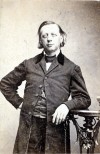
| Rev. Henry Ward Beecher was a leading revivalist during the Second Great Awakening, a religious movement that swept through Protestant churches in the early 1800s. He was a strong advocate for social reform and helped establish many organizations focused on education, temperance (anti-alcohol), and spreading Christianity. Seven of his sons became ministers including Rev. Henry Ward Beecher, and his daughters, Harriet Elizabeth Beecher Stowe (author of Uncle Tom's Cabin) and Isabella Beecher Hooker (suffragist), were prominent social activists |
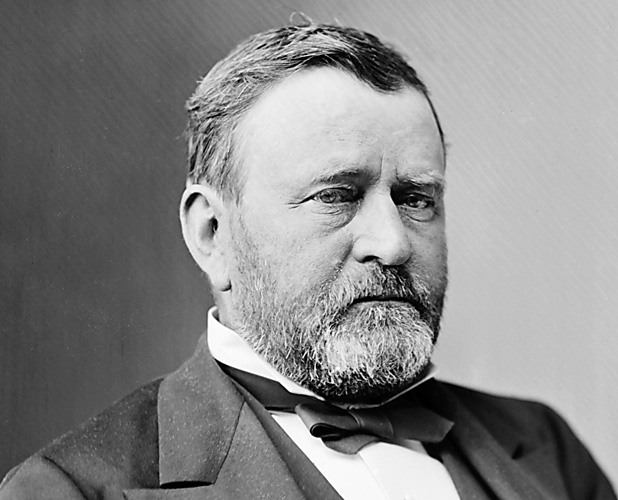
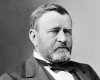
| Ulysses S. Grant was the 18th president of the United States. In 1843, he graduated from the United States Military Academy at West Point. He served with distinction in the Mexican–American War but resigned from the army in 1854 and returned to civilian life impoverished. In 1861, shortly after the Civil War began, Grant joined the Union Army and rose to prominence after securing victories. President Abraham Lincoln promoted Grant to lieutenant general and command of all Union armies. In numerous campaigns, he fought General Robert E. Lee, which ended with the capture of Lee's army and his surrender at Appomattox. In 1866, President Andrew Johnson promoted Grant to General of the Army. Being a war hero, drawn in by his sense of duty, Grant was unanimously nominated by the Republican Party and then elected president in 1868. |
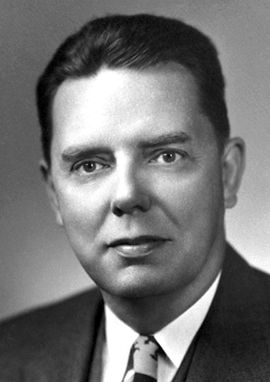
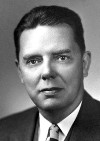
| Dr. Philip Showalter Hench was awarded the Nobel Prize for Physiology or Medicine in 1950 for the discovery of the hormone cortisone, and its application for the treatment of rheumatoid arthritis. The Nobel Committee awarded jointly to Philip Showalter Hench Edward Calvin Kendall, and Tadeus Reichstein "for their discoveries relating to the hormones of the adrenal cortex, their structure and biological effects." |
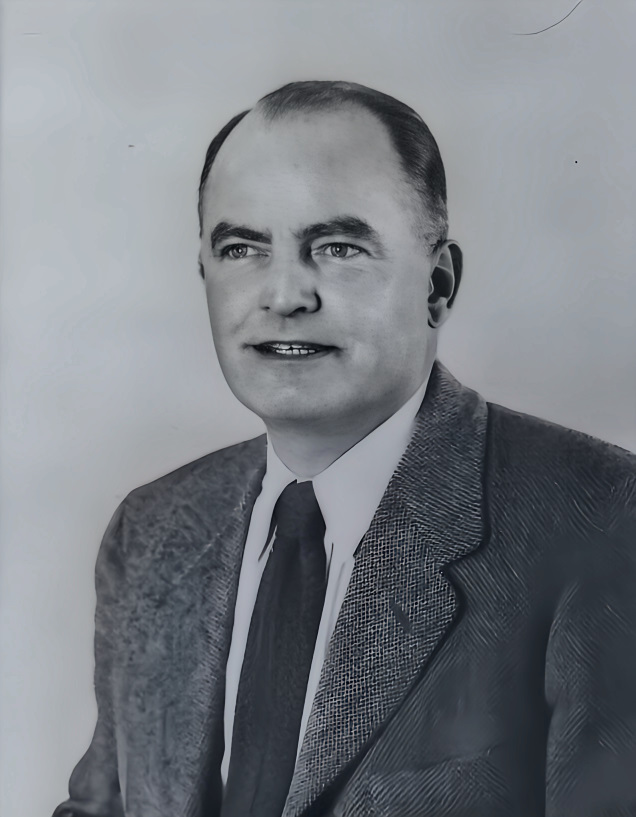
| William Kinsey Hutchinson (1896-1958) was an American reporter who became a friend of presidents, legislators, cabinet members, and other U.S. government diplomats and officials. Between 1913 and 1920, William (Bill) was a reporter for a newspaper in Reading, Pennsylvania. In 1920, he moved to Washington, D.C.and started work for William Randolph Hearst's International News Service (INS). As an INS reporter, he covered the Scopes Monkey Trial in Dayton, Tennessee, and on July 24, 1925, he was the first reporter to file the dispatch stating the outcome. Following Lindbergh's Transatlantic solo flight and return to the United States in 1927, he gave his flight jacket to Bill, who wore it on many occasions and kept it until his death in 1958. Bill, a World War I veteran, received numerous awards from the Air Force, Army, and Navy for patriotic service. He also covered the national political conventions and events at the Capitol. In 1939, he was promoted to Bureau Chief of the International News Service in Washington, D.C. He was a member of the bar in the District of Columbia. For many years Bill was the owner and Vice President of the Washington Redskins football team. Between 1947 and his death, Bill forged a close friendship with Richard Nixon. In late 1949, during a game of hearts, FBI Director J. Edgar Hoover and Bill came up with the idea for a list of names, photographs, and descriptions of the ten worst criminals wanted by the Federal Bureau of Investigation (FBI). On March 14, 1950, the list was compiled and distributed as the FBI's 10 Most Wanted Fugitives list. He died the day after the announcement of the merger of the International News Service with the United Press to form United Press International. On May 26, 1958, the funeral was held at Arlington Cemetery with Vice President Richard Nixon, a close friend, serving as a pallbearer. Bill was awarded the lifetime District of Columbia license plate number "53," which, upon his death in 1958, the license plate was willed to John Willard Marriott |
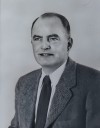
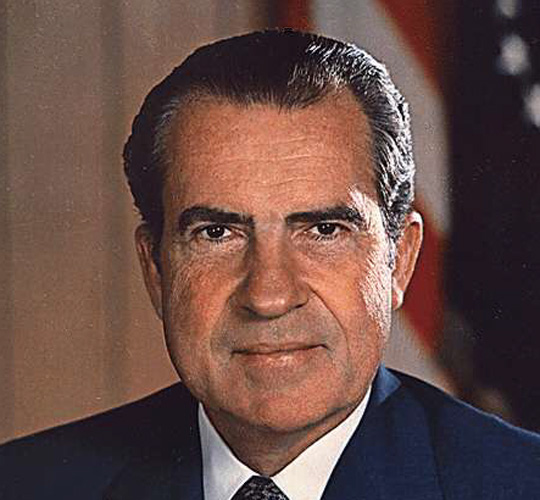
| Richard Milhous Nixon was the 37th president of the United States from 1969 to 1974. During World War II he served in the United States Navy from 1941 to 1946. After the war, Nixon entered politics, serving in the House of Representatives (1947–1950), the Senate (1950–1953), and as Vice President (1953-1961). During this time, he forged a close friendship with Bill Hutchinson, the Bureau Chief of the International News Service and owner of the Washington Redskins. Nixon served as Bill's pallbearer at Arlington Cemetery. In 1969, Nixon became the 37th president and achieved significant milestones during his presidency through détente with the Soviet Union and China. He also brought an end to America's involvement in the Vietnam War. His eventual downfall was a result of the Watergate scandal. On August 9th, 1974, he resigned as president and entered private life, returning to California to focus on other endeavors, including writing. His first of nine books was "RN: The Memoirs of Richard Nixon." |
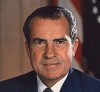
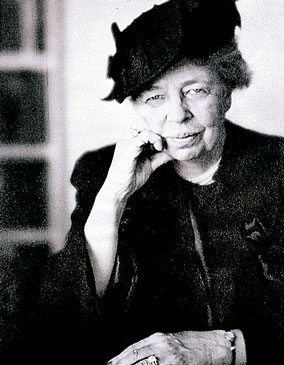
| She was the wife of President Franklin Delano Roosevelt (FDR), a champion for human rights and social justice, she advocated for the underprivileged and minorities. After FDR's death, she continued her work on the international stage. She played a vital role in forming the United Nations, was chair of the UN Commission on Human Rights, and helped draft the Universal Declaration of Human Rights |
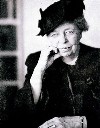
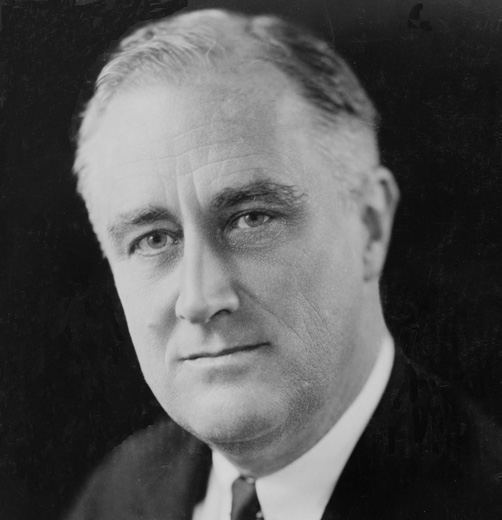
| Franklin Delano Roosevelt (FDR) was the 32nd president of the United States and married to First Lady Anna Eleanor Roosevelt. He holds the record for the longest presidency, serving four terms from 1933 until he died in 1945. Roosevelt is best known for leading the country through two major crises: the Great Depression and World War II. He implemented a series of programs and reforms known as the New Deal to address the economic devastation of the Depression, helped to build the Allied coalition, and developed strategies alongside other world leaders like Winston Churchill and Joseph Stalin. While he died before the war's conclusion, his leadership was essential to the Allied victory |
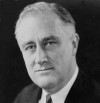
| Charles Michael Schwab was an American steel magnate who significantly influenced the U.S. steel industry. By 1897, he had risen through the ranks at Carnegie Steel Company. He became the inaugural president of the newly established United States Steel in 1901, vital in creating the world's first billion-dollar corporation. He resigned from the presidency two years later to lead his own company, Bethlehem Steel, transforming it into the second-largest steel producer in the US, and he served as president of the American Iron and Steel Institute. Schwab's personal wealth increased significantly before and during World War I as he supplied steel for construction projects and armaments. Although he lost most of his fortune during the 1929 crash, he lived lavishly, maintaining residences in New York City and Loretto, PA |
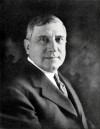
| Olof Persson Stille was a pioneer settler of New Sweden, a colony along the lower reaches of the Delaware River in North America claimed by Sweden from 1638 to 1655. He became a leader among the settlers and was key in promoting the July 1653 list of grievances submitted to Governor Johan Printz, protesting his strict rule. Printz considered this action mutiny and subsequently returned to Sweden. Olof was exercising the right of free speech. When Governor Rising arrived, Olof asked for a prompt trial. Rising, who took a more kindly view toward the freeman, let the matter drop. After the surrender of New Sweden, the Dutch governor, Petrus Stuyvesant, agreed to allow the Swedes and Finns living north of the Christina River to govern themselves. In 1656, Olof, until his retirement in 1664, served as the first chief justice of the Upland Court, the governing body of the New Sweden colony following the Dutch West India Company annexation from Swedish colonial rule |
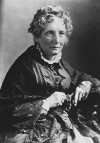
| Harriet Elizabeth Beecher Stowe was a prolific American author most noted for her anti-slavery novel, Uncle Tom's Cabin (1852). The book depicted the harsh realities of slavery and had a profound impact on public opinion, fueling the abolitionist movement between its release and the American Civil War. Daughter of Rev. Lyman Beecher and sister of Rev. Henry Ward Beecher |
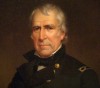
| President Zachary Taylor was the 12th president of the United States. He joined the U.S. Army on May 3, 1808, receiving a commission from President Thomas Jefferson as a first lieutenant in the Kentucky Seventh Infantry Regiment. He served in the U.S. Army for nearly four decades, participating in the War of 1812, the Black Hawk War, and the Second Seminole War. Taylor's most notable victories occurred during the Mexican-American War, where he defeated Mexican forces at Monterrey and Buena Vista, solidifying his status as a national hero. Leveraging his military fame, he resigned his commission in the U.S. Army on January 31, 1849, transitioned into politics, and was elected the 12th president in 1848. Unfortunately, his term was cut short because of his premature death in 1850. His army physician, Alexander S. Wotherspoon, diagnosed the illness as cholera morbus, which was common in D.C. then |